
Beyond Regime Change: The Battle After Tehran

21/09/2026
A
For decades, the strategic debate over the Axis of Resistance has essentially revolved around Iran. The logic is straightforward: Tehran is the primary patron of the network, providing it with the necessary military and financial assistance to sustain its activities. The argument continues: if the Iranian regime collapses, an automated dissolution of the Axis of Resistance follows as well. While this assumption holds a considerable degree of truth, portraying a possible collapse of the Iranian regime alone as an ideal outcome of the current war would be inaccurate.
Yes, regime change would eventually cause major disruptions within the ranks of the network. However, failing to differentiate between disruption and full dismantlement is analytically misleading. After years of development, “Iranian Proxies” have gradually managed to build their own military capabilities, political structures and economic models. Iran remains foundational to thenetwork’s strength, but it is no longer precise to approach the whole Axis as one unified bloc, or as a simple extension of Iran’s dictations.
Interestingly, Hezbollah presents the clearest example. While the militia remains significantly reliant on Iranian assistance, it successfully managed to develop a vast financial network of its own throughout the past decades. The US Treasury assesses that Hezbollah’s annual budget has reached $1 billion per year. The largest portion of this budget comes from Tehran ($700 million); which reaffirms what has been previously stated: Iran remains at the center of the Axis’ strength. However, what this number does not reveal is a deeper interpretation: what happens to the remaining infrastructure if Iranian assistance is suddenly reduced?
Hezbollah has spent the past decades quietly developing additional sources of income to ensure the organization’s endurance. In March 2026, the US Treasury imposed sanctions on a network composed of 16 individuals and entities operating across Lebanon, Syria, Qatar, Slovenia, Poland and Canada. It has been estimated that the network has facilitated the diversion of more than $100 million since 2020 through commercial projects and financial schemes directly linked to Hezbollah. Hezbollah’s illegal activities move beyond financial schemes: earlier investigations detected oil smuggling networks in South America which generated millions of dollars to the organization.
Going back to Europe, Hezbollah’s network has relied on drug proceeds to purchase luxury goods (mainly cars and watches) from Germany. Then, after exporting these goods to West Africa to sell them in exchange of legitimate cash, they would transfer the proceeds back to Lebanon and Syria in order to purchase weaponry. What really matters from these numbers is not the detection of an illicit network itself. Rather, it showcases the degree of organizational depth Hezbollah enjoys. With the possession of financial personnel, the establishment of commercial structures and the consolidation of international connections, the organization has become able to generate resources outside Iran’s direct supervision.
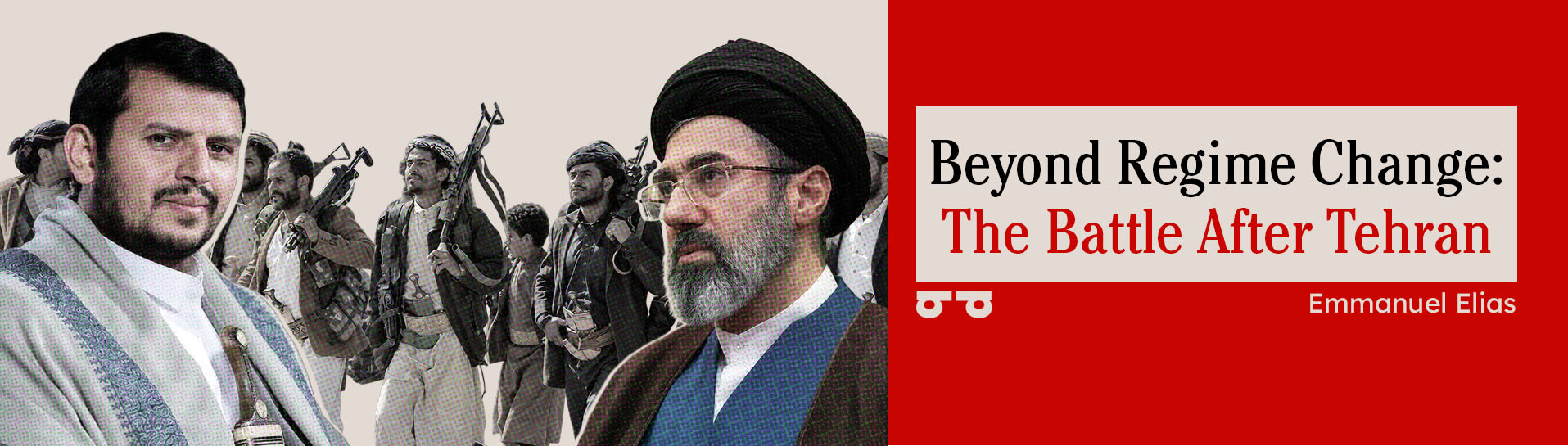
The Houthis reflect a different, yet equally important case to study. Apart from being descendants of the Zaydi branch of Shi’a; which makes them ideologically different from the Islamic Republic’s religious doctrine, the Houthis’ activity dates back to the 1980s. What is noteworthy to mention is that the group hasn’t received assistance from the Islamic Republic until 2004: 20 years after their establishment, contrary to Hezbollah. This fact underscores a crucial reality: the Houthis are structurally separated from Tehran. What really brings the two parties together is their mutual hostility toward Israel and the West. While the Houthis’ relationship with Tehran has gradually deepened through missiles and drone assistance, the revivalist movement has developed in parallel; domestically and regionally, self-sufficient financial and operational systems. Beyond domestic administration and extensive taxation, the group collects an estimated revenue of $2.1 billions annually through tolls and safe passage fees on commercial shipping in the Red Sea. They also sustain commercial operations by storing sanctioned Russian oil to finance their operations. Treasury has detected Houthi-linked procurement and financial networks passing through Yemen, China, the UAE and the Marshall Islands.
Most importantly, the Houthis have actively diversified their regional network transcending Tehran’s umbrella. In a strategic push across the Horn of Africa, the group maintains transactional, yet strategic partnerships with various groups like Al Shabaab, Al Qaeeda in the Arabian Peninsula and ISIS in Somalia. These partnerships did not emerge from a vacuum: they were designed to strengthen the group’s regional presence, moving beyond overdependence on single actors like Tehran. Despite clear ideological and religious divergences, these groups cooperate to facilitate weapons smuggling, technology transfers, piracy and joint illicit financial networks. These transactional partnerships explain the Houthis’ ability to disrupt global waterways well beyond Yemen’s officially recognized borders. While the Islamic Republic remains their main patron, the Houthis have gradually invested in a more flexible economic base and cross-border alliances in Africa which enabled them to project influence far beyond a simple Tehran-Sana’a chain of command.
The differentiation becomes more interesting when the relationship is perceived from the opposite direction. Believing that Iran simply sustains this chaotic network would be absurd. These proxies protect and facilitate Iran’s regional strategy as well. Hezbollah acts as Iran’s primary deterrent front, pressuring Israel from its Northern side. On another hand, the Houthis give Iran strategic influence over one of the world’s most crucial maritime corridors: Bab El Mandeb. This grants Tehran the ability to disrupt global shipping and trade. Together alongside other proxies, they enable Tehran to exert pressure across various fronts, shielding Iranian soil from direct confrontation. This represents the strategic value of the Axis: Tehran gains additional geographic space, additional military capabilities and most importantly, additional fronts for retaliation.
So, what’s at stake? Regime change in Iran would definitely weaken the Axis of Resistance, but it would not dismantle it completely. Iran sits at the top of this Axis, consistently providing it with the required weaponry and strategic support. Yet, this is not enough. What is noteworthy to mention is that such groups originated from rural grievances, not perfectly structured ororganized networks. Their main tactics rely on guerilla warfare or sabotage capabilities. This proves that depriving these groups from advanced weaponry does not automatically erode their physical or operational presence.
The latest war has also exposed the limitations of what was expected to get easily achieved: regime change in Iran. Adding that their diversified networksacross the globe offer them wider alternative weapons suppliers, although in lower degrees. What is required right now is threefold: A coordinated domestic, regional and international maximum pressure campaign against the network itself as an aim to disrupt its funding, procurement and operational frameworks. A proper response therefore extends beyond “greater pressure” which is already applied today. A maximum pressure campaign should be designed to target the mechanisms that enable the Axis to regenerate itself after disruptions.
For Lebanon, this means effectively adopting the FATF framework to improve financial intelligence, beneficial-ownership controls and enforcement against Hezbollah-linked commercial and money-laundering networks. However, this does not come without major domestic reforms, starting with a shift toward a cashless economy. On a broader regional level, a more connected financial intelligence system with customs, shipping and procurement data could be established to rapidly detect the intermediaries through which such organizations replace sanctioned entities and move resources across borders.
Therefore, tying the fate of our countries to mere hypothetical assumptions about regime change would be both catastrophic and irrational. The strategic logic is therefore cumulative, not sequential: If regime change occurs, the network will already be much weaker. If it does not, Iran will still have lost an integral part of its strategic depth.